Mobile Food Business Calgary
Mobile Food Business Calgary
Starting a mobile food business in Calgary becomes much easier when the trailer or truck is planned around the way the food will actually be prepared, served, powered, and cleaned each day.
A strong idea is only the first step. Before investing in equipment, layout, branding, or a custom build, it is important to understand how your mobile food setup needs to work in real conditions. Calgary food entrepreneurs often have different goals. Some want to serve pizza at outdoor events. Some need an ice cream setup for summer crowds. Some want a full cooking line for Indian street food, BBQ, fast food, coffee, or concession sales.
The right plan depends on your menu, equipment, location, serving style, and local operating requirements.
Start With the Food Concept
Every mobile food business should begin with the menu. The type of food you sell affects almost every part of the build.
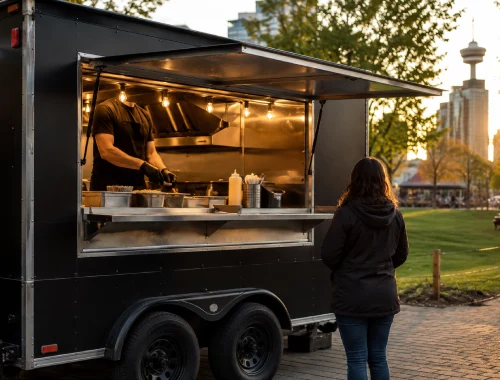
A pizza business may need oven space, ventilation planning, prep space, and heat-safe workflow. An ice cream business may need reliable freezer or refrigeration space, but may not need the same cooking setup. A street food or fast food business may need fryers, grills, burners, sinks, storage, hot water, and a serving window designed for faster customer flow.
The mistake many new owners make is starting with trailer size first. Size matters, but the food concept should guide the size, layout, and equipment. A small unit with the wrong layout can feel crowded and slow. A larger unit with poor planning can waste money and space.
A good mobile food setup should make daily work easier, not just look good from the outside.
Plan the Layout Around Real Workflow
Layout is one of the most important parts of a mobile food business in Calgary. Your trailer or truck needs enough room for cooking, serving, cleaning, storage, and safe movement.
A practical layout should answer clear questions:
Where will food be prepared?
Where will cooking equipment sit?
Where will hot food move after cooking?
Where will cold items be stored?
Where will staff wash hands and clean utensils?
Where will customers be served?
Where will propane, generator, or power connections be placed?
These details matter because a mobile kitchen has limited space. Every inch should have a purpose.
MGM Trailer Equipment and Services Ltd works with customer requirements before building. Customers can explain what they need, share equipment details, and review a layout or drawing before the build moves forward. This helps reduce confusion and gives the customer a clearer idea of how the finished setup will function.
Think About Power Before Choosing Equipment
Power planning is easy to overlook, but it can affect the entire operation. A mobile food business may need electricity for lighting, refrigeration, freezers, small appliances, pumps, and other systems.
A custom build can include a Canadian 110/120V electrical setup, generator-ready options, and external power plug options depending on the customer’s requirements. Some customers may also ask about solar options, but that depends on the build and the power needs.
Before confirming equipment, think about where the business will operate. Some sites may offer external power. Other locations may require a generator. Event sites, private properties, and outdoor sales locations may all have different access conditions.
Power should be planned early so equipment and layout decisions make sense together.
Match Plumbing to Daily Use
A mobile food setup often needs fresh water, used or grey water storage, a water pump, hot water, and sinks. Many food businesses also need a three-sink setup and handwashing area based on their operating requirements.
The exact plumbing setup depends on the food concept and customer needs. Some builds may use onboard fresh water. In some cases, an outside hose or water connection may be part of the plan.
Good plumbing planning supports cleanliness, smoother operation, and better daily use. It also helps the owner prepare for the approvals and local requirements they may need to handle before operating.
Customers should always confirm health department, business, and operating requirements for their own location and type of food business.
Understand Cooking, Ventilation, and Fire Safety Needs
Cooking equipment changes the build requirements. Fryers, grills, burners, ovens, and tandoor setups may need proper ventilation and fire safety planning.
Hood size depends on the layout and the cooking equipment. Some builds may need smaller hoods, while other setups may need larger hood systems. Fire suppression or fire safety setup may also be required depending on the equipment and cooking style.
Not every mobile food concept needs the same systems. An ice cream trailer does not usually need the same setup as a hot food trailer. A coffee or dessert setup may be different from BBQ, pizza, or Indian street food.
This is why custom planning is important. The equipment should be matched with the layout, ventilation, propane, power, and plumbing needs instead of being added as an afterthought.
Choose Materials That Support Food Work
Food businesses need interiors that can handle daily use. Stainless steel interior surfaces are commonly used for food trailer and food truck builds because they support a clean, professional working area. Non-slip flooring is also important for safer movement inside the unit, especially when staff are cooking, cleaning, or working during busy hours.
Material choices can vary depending on the build, but the goal should stay the same: a practical interior that supports real food service work.
A good-looking trailer is valuable, but a workable trailer is more important. The inside should be built for the people using it every day.
Keep Branding Practical
Branding helps people recognize your business, but it should work with the trailer design. Exterior colours, paint, logo placement, service windows, and customer-facing areas should be planned together.
A service window should be placed where it supports customer flow and staff movement. Logo placement should be visible without interfering with important doors, vents, equipment access, or exterior storage areas.
For a mobile food business in Calgary, a clean and professional appearance can help build trust at events, private locations, job sites, and public-facing food sales environments.
Know the Costs Are Usually Custom
Most mobile food setups are not one-size-fits-all. Pricing depends on trailer size, build type, equipment, layout, plumbing, electrical work, propane setup, finishing, and other custom requirements.
A quote-based process is usually better than guessing from a fixed price. It helps the builder understand what the customer actually needs and helps the customer avoid paying for features that do not fit their business.
MGM Trailer Equipment and Services Ltd provides custom quote-based builds. A 50% deposit is required before starting, and financing is available. Build timelines may commonly range from about 10 to 16 weeks depending on the build and current workload.
Prepare for Approvals and Operating Requirements
A custom trailer or truck can be built with important systems checked before delivery, including plumbing, electrical, gas or propane, and fire-related setup where required. A VIN or serial number can also be provided to help with insurance and documentation needs.
At the same time, food business owners should understand their own responsibilities. Local health department approvals, business licences, operating permits, menu approvals, and site-specific requirements are the customer’s responsibility.
Planning early helps avoid delays after the build is complete.
Work With a Builder Who Asks the Right Questions
A good builder should want to understand your food concept before recommending the setup. The conversation should cover your menu, equipment, trailer size, layout, serving style, power needs, plumbing needs, propane requirements, storage, branding, timeline, and budget.
When these details are discussed early, the final build can better support your business.
MGM Trailer Equipment and Services Ltd builds custom food trucks and trailers around customer requirements, with layout planning before the build begins. From pizza, ice cream, coffee, BBQ, Indian street food, fast food, concession, and mobile kitchen setups, each project can be planned around the way the business needs to operate.
To start planning your mobile food business in Calgary, contact MGM Trailer Equipment and Services Ltd to discuss your idea, required equipment, layout needs, and custom quote.